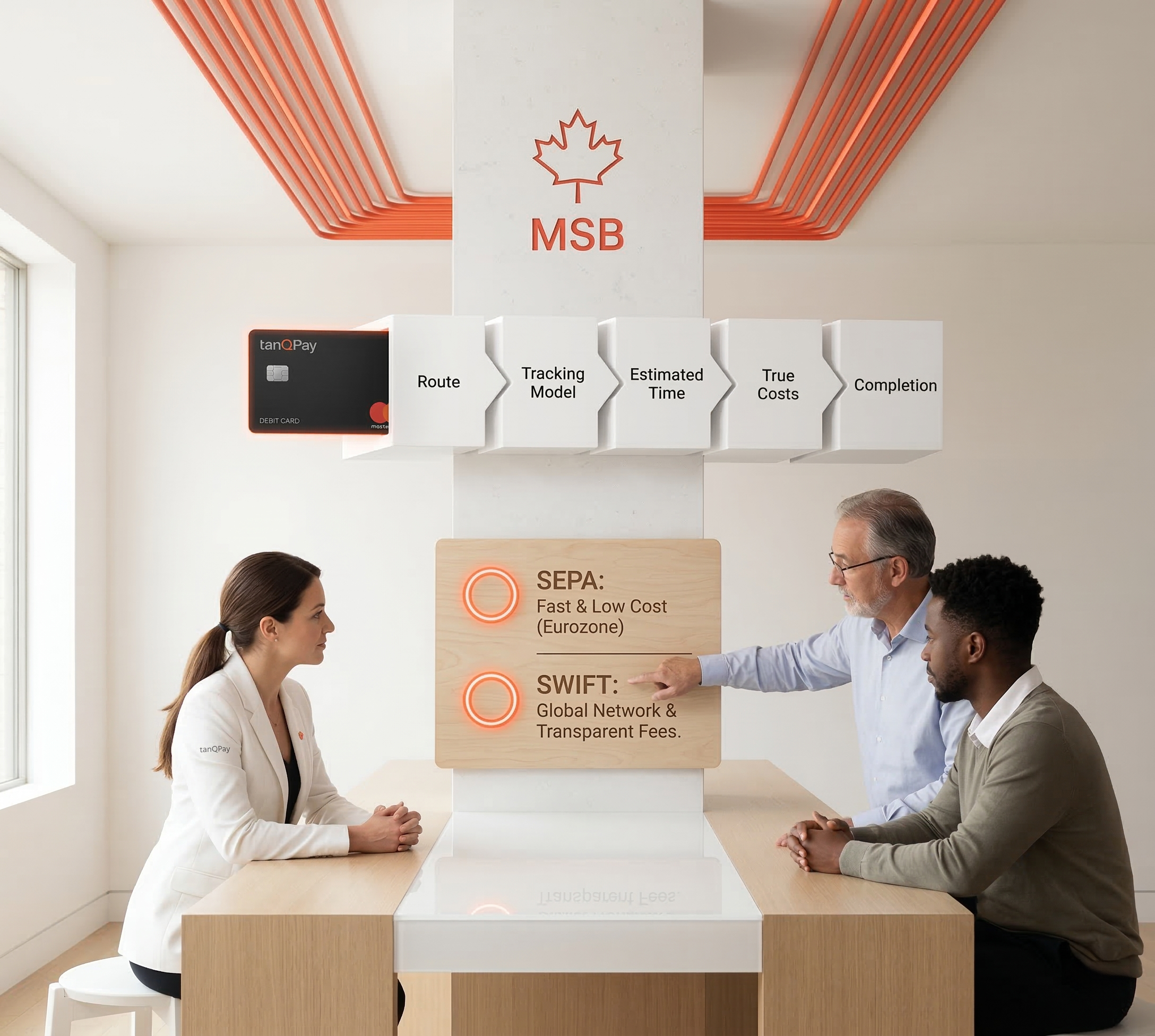
In financial services, trust is never built by design alone. A smooth interface, fast onboarding, and modern payments can improve the user experience, but they do not replace the need for structure, accountability, and regulatory clarity. In Canada, one of the terms that often appears in this context is MSB, short for Money Services Business.
For many users, the term sounds technical or distant. For operators, partners, and compliance teams, it is much more important than that. It is a classification that signals how a business is expected to operate within Canada’s anti-money laundering and anti-terrorist financing framework. In practical terms, it helps define responsibilities, oversight expectations, and the operational discipline required from businesses that move, exchange, or handle certain forms of money and value.
Understanding what MSB means is therefore not just a legal exercise. It is also a trust question.
In the Canadian context, an MSB generally refers to a business with a place of business in Canada that provides one or more prescribed services such as foreign exchange dealing, remitting or transmitting funds, issuing or redeeming certain negotiable instruments, dealing in virtual currency, or providing crowdfunding platform services. That means the label is not simply a branding choice or a broad fintech description. It is tied to the nature of the services being offered and the obligations that come with them.
That distinction matters because in modern finance, many businesses want to appear seamless on the surface while operating across complex payment, wallet, transfer, or value-movement flows underneath. The more digital financial services become, the more important it is for users and partners to understand whether those activities sit inside a recognized regulatory framework.
When people hear that a company is connected to the MSB framework in Canada, the immediate assumption is often that the term means the business has been “approved” in a broad commercial sense. That is not the right way to read it. The better interpretation is that the business falls into a regulated category with defined obligations. It is about accountability, not marketing.
A serious compliance posture begins with understanding that trust is built through repeatable controls. In the MSB context, that includes more than registration alone. It includes reporting certain transactions, keeping required records, knowing clients, and maintaining a compliance program. These are not decorative compliance concepts added for appearance. They are operational responsibilities that shape how the business behaves day to day.
This is where the conversation becomes more relevant for customers and commercial partners. A well-structured compliance environment reduces uncertainty. It supports more consistent internal controls. It gives counterparties greater confidence that the business is not improvising its financial operations. And in a sector where user confidence can be damaged by even small signs of ambiguity, that kind of structure matters.
Registration is often the most visible element, but it should not be misunderstood. In Canada, money services businesses operating in the country must register with FINTRAC before they begin operating, and foreign money services businesses that direct and provide services to clients in Canada must also register before starting those activities. At the same time, FINTRAC makes an important distinction: registration does not mean endorsement, licensing, or a commercial guarantee of the business. It means the business has met the legal requirement to register within the applicable federal framework.
That nuance is essential. Trust should not be built on exaggerated claims. It should be built on transparency about what a regulatory status does and does not mean. A compliance-aware business does not use these terms to create false comfort. It uses them to show that it takes structure seriously and understands its obligations.
There is also a practical reason this matters beyond formal compliance language. Banks, payment partners, service providers, enterprise clients, and informed users all look for signs that a financial business is operating in a credible and verifiable manner. A business that understands the meaning of MSB status is better positioned to communicate clearly with those stakeholders. It can explain what framework it operates under, what obligations apply to it, and how those obligations connect to risk controls and user protection processes.
In other words, the value of understanding MSB status is not limited to regulators. It improves communication across the whole ecosystem.
For users, this can translate into something simple but important: confidence that the business is not treating compliance as an afterthought. In a market crowded with financial products, clarity itself becomes a competitive advantage. People want to know who they are dealing with. They want to understand whether there is a real compliance architecture behind the service. They want evidence that operational discipline exists before problems arise, not only after something goes wrong.
For businesses, that means trust cannot be reduced to brand language alone. It must be supported by governance, documentation, internal controls, and a clear understanding of regulatory definitions. A company that speaks about transparency but cannot explain the framework behind its services leaves a gap between message and reality. A company that understands what MSB means closes that gap with substance.
This is particularly relevant in areas such as cross-border payments, stored value, virtual currency activity, and digital financial experiences that combine speed with convenience. The easier a product feels for the end user, the stronger the underlying control environment often needs to be. Simplicity on the front end should rest on seriousness in the background.
That is why the MSB concept deserves to be understood in plain language. It is not just a term for compliance officers or legal teams. It is part of how financial trust is communicated in Canada. It tells users, partners, and institutions that certain financial activities are not operating in a vacuum. They sit within a framework that expects registration, reporting, recordkeeping, client verification, and an active compliance program.
Seen from that perspective, “MSB” is not merely an acronym. It is a signal of operational responsibility.
And in modern financial services, responsibility is one of the clearest foundations of trust.
 Payments
 Cards
Cards
 Automation
 Family
 Compliance